

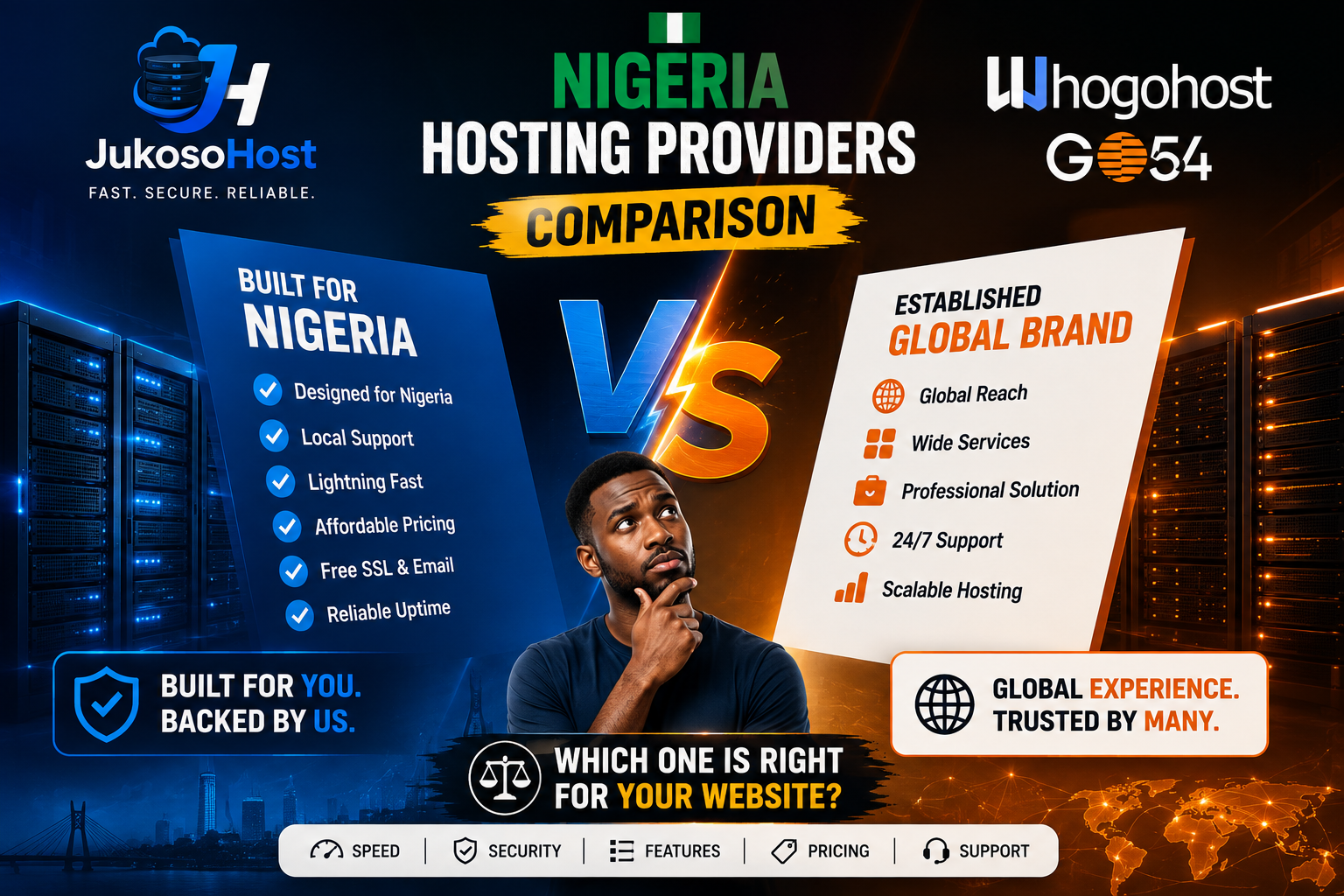
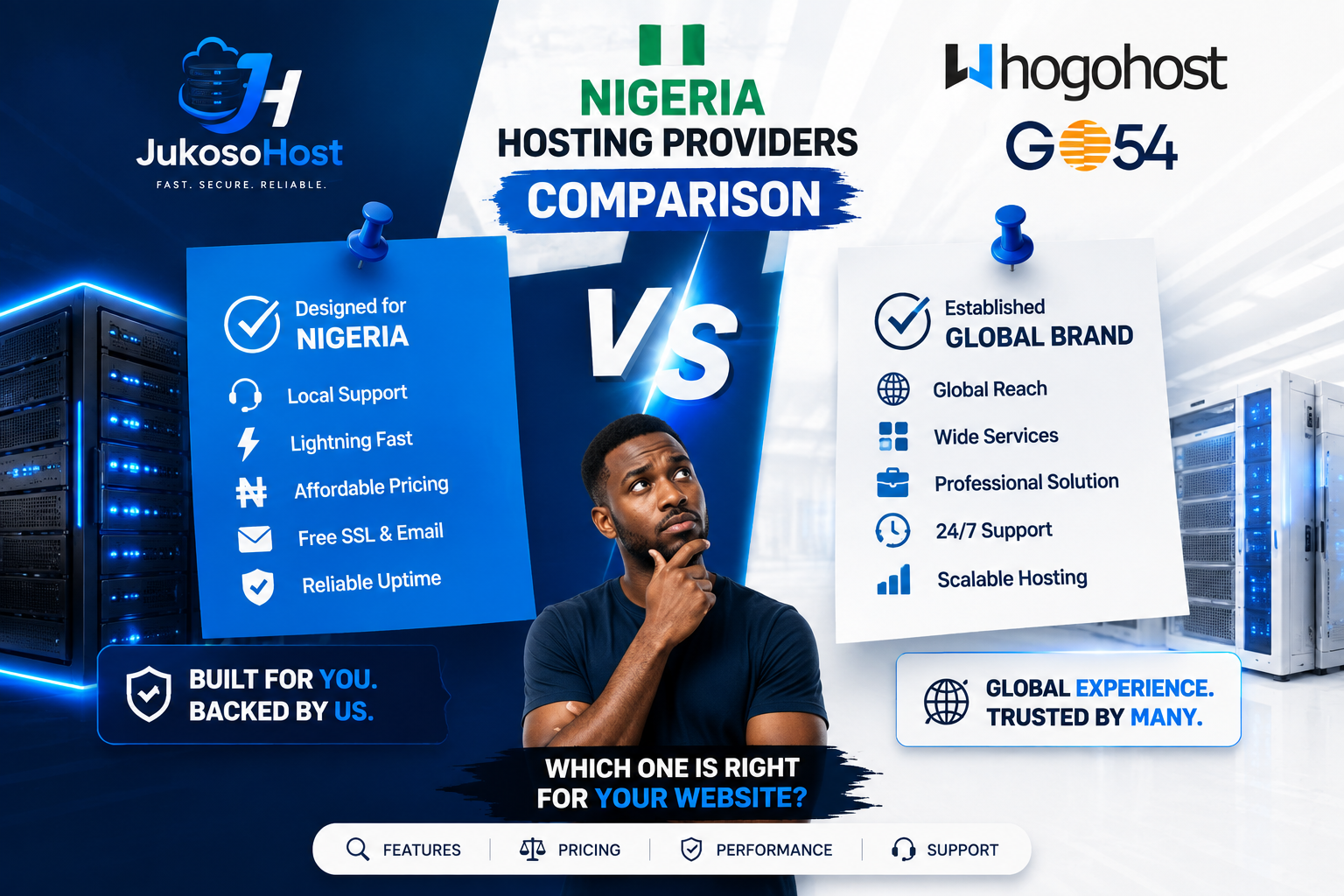
If you’re building a website for a Nigerian audience, picking the right hosting provider can save you headaches down the road. Two local names that keep coming up are JukosoHost and Whogohost. Both offer shared, VPS and dedicated hosting plans designed with Nigerian businesses and bloggers in mind. But which one actually fits your site better? Let’s compare them on speed, uptime, pricing and support so you can decide without guessing. This Nigeria hosting providers comparison will help you see which host meets your needs.
Why local hosting in Nigeria matters for your website
Hosting your site on servers in Nigeria usually means faster load times for visitors in Lagos, Abuja or Port Harcourt. Your data doesn’t have to travel halfway around the world, so pages appear almost instantly. Local hosts also speak your language,literally. Their customer support teams often respond in English and sometimes in Yoruba, Hausa or Igbo, which can be a huge help when you’re troubleshooting at 2 a.m. Plus, pricing is in naira, so you won’t get hit with surprise exchange-rate shocks when your invoice arrives.
Of course, local doesn’t always mean perfect. Some international hosts with Nigerian data centers still outperform local ones in certain areas. But for most small to medium sites targeting Nigerian users, a local host is usually the safer bet.
Nigeria hosting providers comparison: speed and real-world tests
Speed can make or break a website. A slow site frustrates visitors and can push your site down the search rankings. So how do JukosoHost and Whogohost perform in everyday use? This Nigeria hosting speed test comparison shows what to expect.
Where the servers live and why it matters
Both companies run data centers in Nigeria. JukosoHost’s main hub is in Lagos, while Whogohost also has a strong presence in Lagos and additional infrastructure elsewhere in the country. The closer the server is to your audience, the lower the delay before data starts transferring. For a Nigerian website, that means pages load faster whether your visitors are in Ikeja, Wuse or Garki.
Independent speed tests from Lagos and beyond
Tests using GTmetrix and Pingdom show both hosts deliver solid performance, but with small differences. JukosoHost often clocks slightly faster average load times for static pages, especially when measured from Lagos-based servers. Whogohost tends to be more consistent across different Nigerian cities, which matters if your readers are spread out. In practice, the gap is usually small,often under a second,but for high-traffic sites or online stores, even half a second can change how people interact with your pages.
Imagine an online store hosted on JukosoHost loading in 1.2 seconds versus the same store on Whogohost at 1.5 seconds. That difference might not sound huge, but it can affect bounce rates and sales, especially on mobile networks where speeds fluctuate.
Built-in speed boosters
Both providers include tools to make your site faster. JukosoHost runs LiteSpeed Web Server with LSCache, which is excellent for WordPress sites. Whogohost offers Varnish caching and Cloudflare integration, both of which can give your site a noticeable lift. If you’re using WordPress, you can also install popular caching plugins like WP Rocket or W3 Total Cache on either host. So whichever you pick, you’ll have the right tools to keep your site snappy.
Uptime and reliability: can you trust them when it counts?
Nothing kills a business faster than a site that’s down when customers try to visit. Uptime,the percentage of time your site is accessible,is critical. Most reputable hosts promise at least 99.9% uptime, but real-world results vary. This Nigeria hosting providers comparison looks at how JukosoHost and Whogohost handle reliability.
How they’ve performed over time
Both JukosoHost and Whogohost publish uptime stats on their sites, and third-party monitors like UptimeRobot and StatusCake track their performance. Generally, both stay above 99.9%, which is excellent. JukosoHost often reports slightly higher average uptime, especially during traffic spikes like Black Friday or major events. Whogohost, meanwhile, is known for quick issue resolution when outages do happen. Their support team usually restores service within minutes in many cases, so while JukosoHost may edge them out in raw numbers, Whogohost’s responsiveness can be a lifesaver when minutes count.
Backups that actually work
Both hosts include automated backups in their plans. JukosoHost gives you free daily backups kept for 30 days. Whogohost offers weekly backups on basic plans and daily backups on higher tiers. If you run an e-commerce site or a blog with frequent updates, daily backups give you extra peace of mind. You can also trigger manual backups anytime through their control panels.
Keeping the lights on during power cuts
Nigeria’s power supply can be unreliable, so both hosts invest in backup systems. JukosoHost uses multiple generators and battery backups to keep servers running during outages. Whogohost operates from a Tier III data center with redundant power and multiple internet providers, so even if one ISP goes down, your site stays online. That redundancy helps minimize downtime, which is especially important for businesses that can’t afford interruptions.
Cheap web hosting in Nigeria: pricing that fits your budget
Cost often decides the winner. Let’s compare JukosoHost and Whogohost on pricing and what you actually get for your naira in this Nigeria hosting providers comparison.
Shared hosting: the best place to start
Both hosts offer shared hosting, perfect for blogs, small business sites and portfolios. JukosoHost’s entry plan starts at around ₦1,500 per month (billed annually), while Whogohost’s equivalent plan is slightly cheaper at ₦1,200 per month. Both include a free domain for the first year, unmetered bandwidth and a control panel like cPanel or DirectAdmin.
Here’s where JukosoHost pulls ahead: its plan includes free SSL certificates and daily backups, extras that Whogohost often charges for. Over a year, those savings can add up. Whogohost’s higher-tier plans give you more storage and CPU cores, which may be worth it if you expect rapid growth.
VPS and dedicated servers for growing sites
When shared hosting isn’t enough, both providers offer VPS and dedicated options. JukosoHost’s VPS plans start at ₦15,000 per month, while Whogohost’s begin at ₦12,000. Dedicated servers from JukosoHost start at ₦80,000 versus Whogohost’s ₦75,000. The price gap isn’t huge, but it adds up, especially for startups watching every naira.
One difference worth noting: JukosoHost includes managed services with its VPS plans,server monitoring and security updates,while Whogohost charges extra for full management. If you’d rather not hire a sysadmin, JukosoHost can save you time and stress.
Watch out for renewal surprises
Both hosts run promotions, especially around holidays like Christmas or Black Friday. JukosoHost often offers up to 50% off the first year, while Whogohost sometimes throws in free migration or extra storage. Always check their sites before signing up, because introductory prices can look very different from renewal rates.
Both companies are transparent about renewal pricing, but it’s still smart to read the fine print. A host that seems cheap today can become expensive tomorrow if the renewal rate jumps unexpectedly.
Customer support: who’s really got your back?
Even the best hosts run into issues. When something goes wrong, responsive and knowledgeable support makes all the difference. How do JukosoHost and Whogohost handle customer service? This Nigeria hosting providers comparison covers what to expect.
How to reach them and how fast they respond
Both hosts offer 24/7 support via live chat, email and phone. JukosoHost also has a ticketing system and a knowledge base packed with tutorials. Whogohost runs a community forum where users help each other. In practice, live chat is usually the fastest route, with response times often under a minute during busy hours.
What users say about their experience
Customers consistently praise both hosts for friendly, patient support teams. JukosoHost’s staff often go the extra mile, helping with issues beyond hosting,like WordPress errors or plugin conflicts. Whogohost’s support is also highly rated, though some users report longer waits during high-traffic events like major sales days.
If you’re not technical, JukosoHost’s managed services can be a game-changer. Their support team can handle server tweaks or debugging for you, often for free. Whogohost’s support is great, but advanced help may come with an extra fee.
Real-world response times
Independent tests show JukosoHost’s average live chat response time is about 30 seconds, with issues usually resolved in 10 to 15 minutes. Whogohost averages around 45 seconds for responses and 20 minutes for resolutions. Both are impressive, but when your site is down, every minute counts.
Which host should you pick for your Nigerian site?
So, JukosoHost or Whogohost? The answer depends on what matters most to you. This Nigeria hosting providers comparison breaks down the key differences to help you decide.
If speed and managed services top your list, JukosoHost is likely the better fit. Their slightly faster load times, higher uptime averages and hands-on support can make a real difference, especially for WordPress sites or e-commerce stores. Plus, their pricing is competitive once you factor in free daily backups and SSL certificates.
If you’re watching your budget and want a solid, community-backed option, Whogohost is a strong choice. Their entry prices are lower, and their infrastructure is reliable. Just be ready to handle some technical tasks yourself or pay for managed services if needed.
Remember, hosting is just one piece of the puzzle. Your site’s speed also depends on how well it’s built, the plugins you use and how you optimize images and content. Start with a plan that fits your budget and grows with your traffic, and don’t hesitate to upgrade as your needs change.
Still unsure? Many hosts offer a 30-day money-back guarantee or a free trial. Use those offers to test both platforms before committing. That way, you can see which one feels right for your site and your workflow.
At the end of the day, the best hosting provider is the one that meets your needs without breaking the bank. Both JukosoHost and Whogohost are reliable, locally based options that can help your Nigerian website thrive. The key is to weigh the pros and cons based on your goals,and then get started building something great.
Next steps: pick your host and launch your site
If you’ve made your choice, you’re just a few clicks away from launching. Both JukosoHost and Whogohost make it easy to sign up, install WordPress or another CMS and start publishing in minutes. Don’t let hosting hold you back,pick a plan, set up your site and take the first step toward reaching your audience.
And if you’re still torn, why not try both? Many hosts offer free migrations, so you can switch later if you change your mind. The most important thing is to get started and keep improving as you go.
Frequently Asked Questions
Which hosting provider is faster in Nigeria, JukosoHost or Whogohost?
Independent tests show JukosoHost often has slightly faster load times for Nigerian users, especially for WordPress sites using LiteSpeed caching. However, Whogohost’s performance is still strong and more consistent across different cities.
Do both hosts offer free domain names?
Yes. Both JukosoHost and Whogohost include a free domain name for the first year with their shared hosting plans.
Can I get daily backups with both providers?
JukosoHost includes free daily backups with all shared hosting plans. Whogohost offers daily backups only on higher-tier plans; basic plans include weekly backups.
Which host is better for e-commerce sites in Nigeria?
JukosoHost is often recommended for e-commerce due to its faster speeds, higher uptime averages and managed VPS options. Whogohost is also reliable, but you may need to pay for advanced support or managed services.
Do JukosoHost and Whogohost support WordPress?
Yes. Both hosts fully support WordPress and offer one-click installation through their control panels. They also provide caching tools and security features optimized for WordPress sites.
Ready to choose your host? Visit JukosoHost and Whogohost’s websites to compare plans side by side, then pick the one that fits your site’s needs and budget.







Discussion