
Daily Struggles vs Political Ambitions The Nigerian Story
March 31, 2026
Why Nigerian Parents Struggle With Raising Kids (And What Is Quietly Failing Us)
March 31, 2026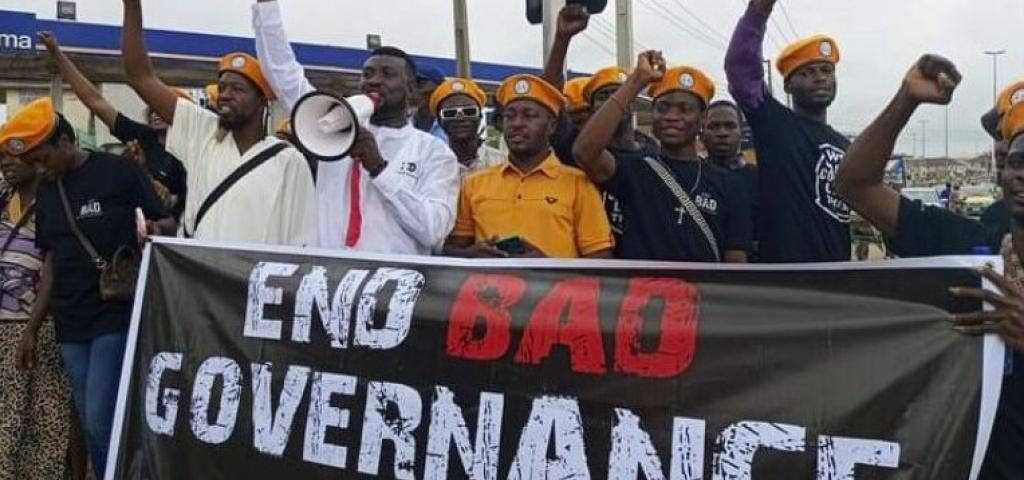
I was at a buka near my office on Friday. Small place, plastic chairs, the kind where the pepper soup is excellent and the television on the wall is always showing news nobody asked for. The woman running the place — I have been buying food from her for almost two years now — was counting change and shaking her head at the same time. I asked her what was wrong.
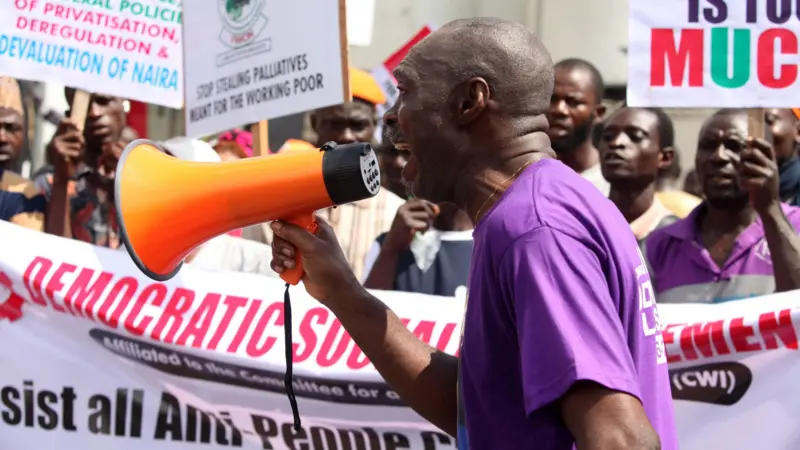
She looked at me like I had asked a very funny question. Then she said, "My brother, I use N70,000 minimum wage talk. That money cannot buy two bags of rice anymore. How am I supposed to feed children with this kind of country?"
I did not have an answer. And honestly, neither does anyone in Abuja right now.
"With a minimum wage of N70,000,
many Nigerians are unable to meet basic needs."
This Is What Nigeria Actually Looks Like Right Now
Let us not do what politicians do and dress the numbers up. Let us just look at them plainly, the way ordinary people experience them every single day.
Last night in Jos, families are waking up without people they went to sleep with. Palm Sunday night, Angwan Rukuba, gunmen on motorcycles, over 30 people confirmed dead and the count is still rising. But Jos is not a standalone story this week. It is just the loudest headline from a country that has been bleeding quietly from many directions at once.
Food prices surged in Lagos markets as petrol costs spiked through March 2026. The naira is facing what economists are politely calling an acid test as the US Dollar index hits a 10 month high. Nigeria's foreign reserves dropped by 547 million dollars in just two weeks. And insecurity is not just a northern problem anymore. It is a national economic problem. Farmers cannot farm. Trucks cannot move safely. And the food that does make it to your market costs more than it did three months ago because of everything it took just to get there.
🔴 The part that stings most: An APC chieftain named Joe Igbokwe said publicly last week that insecurity in Nigeria is man made, accusing politicians of sponsoring violence for political gain after they lose elections. Not an opposition figure. Not an activist. Someone from the ruling party. When the people inside the system start saying it out loud, you know it is far worse than what is being reported.
And the Government Says Things Are Getting Better
Okay, let me be fair. I have read the numbers. I have seen the January 2026 presidential address where President Tinubu pointed to the stock exchange gaining 48.12 percent in 2025. Foreign reserves at 45.4 billion dollars entering January. Credit rating upgrades from Moody's, Fitch and Standard and Poor's. FDI jumping from 90 million dollars to 720 million dollars in one quarter.
Those are real numbers. I am not going to pretend they are not.
But here is the thing that economists keep saying and that nobody in government wants to highlight: the macroeconomic improvements have not yet reached the ordinary Nigerian household. The GDP is growing. Your pocket is not. The stock exchange celebrated. Your school fees did not come down. Investors are returning. Your landlord is still raising rent. Two completely different Nigerias exist at the same time in 2026, and the one politicians talk about and the one the buka woman lives in are not the same country.
📌 What the analysts are really saying: ThisDay described 2026 as an audition year for Nigeria. It will reveal whether our institutions can hold under pressure and whether reforms can earn trust. PwC noted that consumer spending recovery remains limited by weak real income growth. The IMF projects 4.4 percent GDP growth for 2026. But none of those projections change what N70,000 can actually buy at the market today.
So About 2027
Here is my honest concern. And I say this not as someone who has given up on Nigeria because I have not. I say this as someone who has watched this country for fifteen years and cares too much to pretend.
If 2027 is just another election where we swap one set of faces for another set of faces without changing the structure underneath, then the buka woman is still going to be counting change and shaking her head in 2029. The families in Jos are going to be burying people in 2028. The farmer in Benue who cannot go back to his land because of bandits is still going to be hungry next planting season regardless of what the ballot says.
Elections in Nigeria have historically been referendums on personality, not policy. On tribe, not track record. On how much stomach infrastructure was distributed in the final week of campaigning, not on what the candidate actually did for four years. And as long as that is the template, 2027 will change the faces and leave the problems completely untouched.
Christian leaders held a press conference in Lagos just yesterday. Bishop Mike Okonkwo. Pastor Ayo Oritsejafor. Prophet Isa El Buba. These are not small people. They stood together and said Nigeria is bleeding and drifting towards instability. They called for a state of emergency. They said elections in Nigeria have become financial contests rather than contests of competence and vision. And they urged Nigerians to vote by conscience rather than party loyalty.
I am not a pastor. But that message? I do not know what else to add to it.
"Today, elections seem to be less about competence or vision,
and more about how much money one has."
Here Is What I Actually Believe
I believe 2027 can be different. Not automatically. Not magically. But deliberately.
It becomes different when enough Nigerians decide to treat their vote like the powerful thing it actually is. When we stop voting for the person who came to our street with a generator and start asking what they did in the state house, the senate, the local government for the last four years. When we hold incumbents accountable not just on election day but every single day between now and then.
The analyst Dakuku Peterside wrote something I have not stopped thinking about. He said 2026 will be an audition year, and the future is already watching. He is right. The question is whether we are watching too. Not just the politicians. Ourselves. Our choices. Our willingness to stay informed and stay uncomfortable and refuse to be purchased.
The buka woman cannot afford two bags of rice on her monthly wage. The families in Jos are counting their dead this morning. The farmer in Benue has not been back to his land in months. These are not statistics. These are the real audition. And 2027 is only the result.
💬 Tell me genuinely: What would have to change between now and 2027 for you to actually believe the election could make a difference? Drop your honest answer in the comments. I am reading all of them and I will reply.
Stay Awake. Nigeria Needs You Paying Attention.
Honest political writing with no party lines and no spin. Just Nigeria as it actually is right now. Free always.
Subscribe Free